Recognizing the Warning Signs Your Aerobic System Needs Repair
My aerobic system isn't working right. Who provides aerobic system repair in Garden Ridge, TX? If you're dealing with a malfunctioning aerobic septic system, Van Delden Wastewater Systems provides expert aerobic system repair services throughout Garden Ridge, TX. Their Texas-certified technicians can diagnose and fix common issues like alarm problems, pump failures, clogged filters, and timer malfunctions.
Quick Answer: Who Repairs Aerobic Systems in Garden Ridge?
- Van Delden Wastewater Systems - Texas-certified OSSF technicians serving Garden Ridge
- Services include - System diagnosis, pump repair/replacement, filter cleaning, alarm troubleshooting, timer adjustments
- Response time - Emergency service available for urgent sewage issues
- Qualifications - State-certified Site Evaluators with extensive aerobic system experience
When your aerobic system starts acting up, it's more than just an inconvenience. Alarm lights flashing, sewage odors around your property, or wet spots in your yard signal problems that need immediate attention. Understanding what's wrong and getting qualified help fast protects your home, your property value, and your family's health.
For comprehensive information about maintaining your system, check out our guide to aerobic system service, or contact Van Delden for expert repair services.
What Are the Common Signs My Aerobic System Isn't Working Correctly?
It's natural to feel a bit lost when your aerobic system starts acting up. After all, these systems are designed to operate largely out of sight, quietly doing their important work. However, when things go awry, your system has several ways of telling you it's unhappy. Recognizing these common signs early can save you a lot of hassle and potential damage.
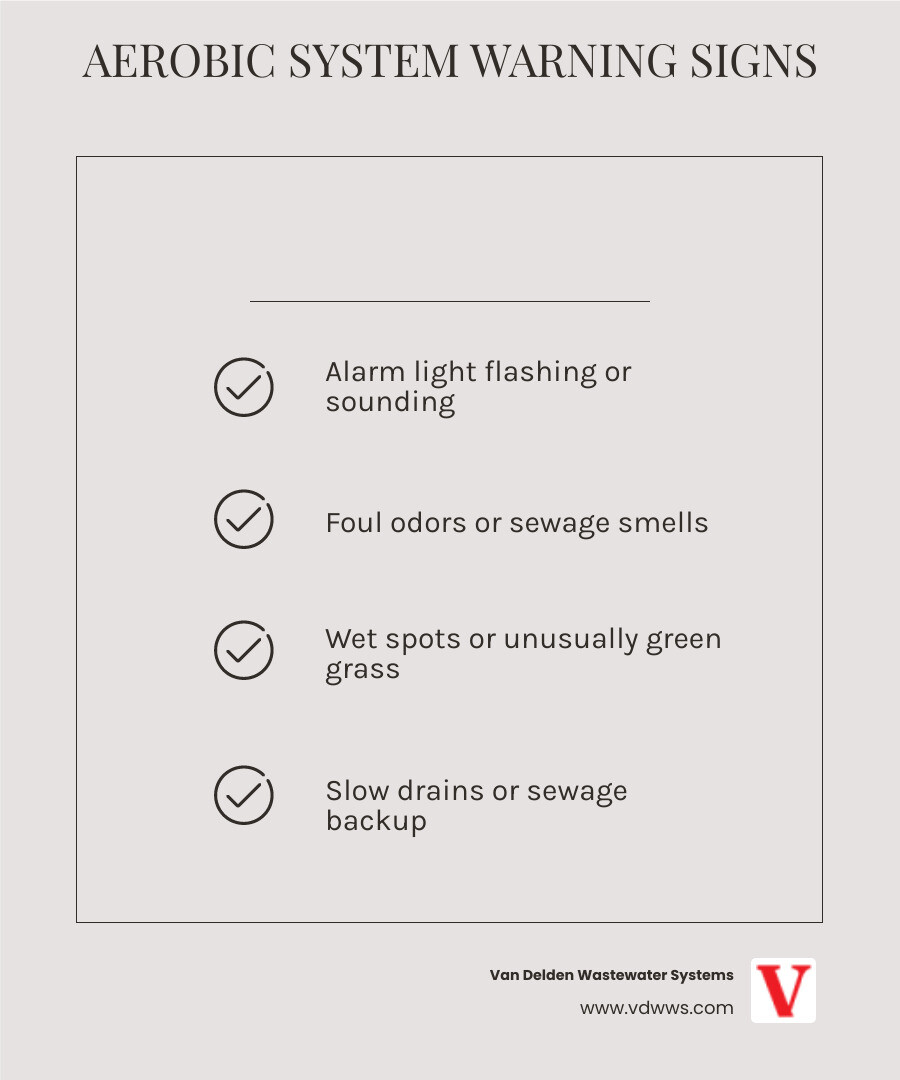
One of the most obvious indicators is an alarm sounding or a red alarm light on your control panel. This is your system's way of shouting for help. Don't ignore it! An alarm means there's a critical issue that requires immediate attention, whether it's a pump failure, high-water level, or another malfunction.
Beyond the alarm, your senses can provide crucial clues. Foul odors or sewage smells around your property, particularly near the septic tank, drainfield, or sprinkler heads, are a clear sign of trouble. These odors indicate that wastewater is not being treated properly, or that it's surfacing where it shouldn't be. Similarly, if you notice gurgling pipes or slow drains inside your home, it could be a symptom of a backed-up system. In severe cases, you might even experience sewage backup into your sinks, toilets, or bathtubs, which is a definite emergency.
Outside, keep an eye out for wet spots in your yard, especially in areas where your drainfield or sprinkler system is located. These soggy patches, even during dry weather, suggest that effluent is not draining or evaporating as it should. You might also notice unusually green or lush grass in certain areas, which can indicate that untreated or poorly treated wastewater is fertilizing the lawn. While green grass sounds nice, in this context, it's a warning sign. Finally, if your sprinkler heads aren't working or are spraying inconsistently, this could point to issues with the pump, lines, or even clogs within the dispersal system. Any of these signs mean it's time to investigate and potentially seek professional repair.
Potential Causes of Aerobic System Malfunctions
Aerobic systems are complex, and their malfunctions can stem from a variety of sources. Understanding these potential causes can help us diagnose the problem more effectively.
One of the simplest yet most disruptive causes is power failure. Aerobic systems rely on electricity to power their aerator pumps, which introduce oxygen into the wastewater for treatment, as well as the effluent pump that disperses the treated water. A power outage, tripped breaker, or electrical issue can bring the entire treatment process to a halt.
Clogged filters are another common culprit. Over time, solids can build up and restrict the flow of wastewater, hindering the system's efficiency. Similarly, aerator pump failure can be a major issue. If the aerator isn't working, the crucial oxygenation process stops, leading to inadequate treatment and foul odors.
Timer issues can also throw an aerobic system out of whack. The timers control how long the aerator runs and when the effluent pump disperses water. If these timers are set incorrectly or malfunction, the system won't operate efficiently. For example, specific timers for aerators and sprinkler pumps need to be set precisely for optimal performance.
Beyond mechanical failures, improper household habits play a significant role. Flushing non-biodegradable items, pouring grease down drains, or using excessive amounts of harsh chemicals can disrupt the beneficial bacteria in the system, leading to clogs and treatment failures. We've seen how seemingly harmless daily routines can impact a delicate aerobic system.
Finally, a pervasive cause of issues is simply a lack of maintenance. Like any sophisticated system, aerobic septic systems require regular check-ups, cleanings, and inspections to ensure all components are functioning correctly. Neglecting this can lead to small issues escalating into major, costly repairs.
What's Included in a Professional Aerobic System Repair Service?
When your aerobic system isn't working right, a professional repair service offers a systematic approach to get things back in order. We understand that you want a thorough solution, not just a quick fix.
The process typically begins with a comprehensive system diagnosis. Our technicians will inspect all components of your aerobic system, from the pretreatment tank to the dispersal field, utilizing their expertise to pinpoint the exact source of the malfunction. This includes checking electrical connections, pumps, aerators, and controls. If your alarm is sounding, alarm troubleshooting is a priority, as it signals an immediate problem that needs to be addressed.
Common repairs often involve the heart of the system: the pumps. This could mean pump repair if a component can be fixed, or pump replacement if the unit is beyond repair or too old to be reliable. The aerator pump, which introduces oxygen, and the effluent pump, which disperses treated water, are critical.
Maintenance tasks are also integral to repair. This includes filter cleaning to ensure proper flow and prevent blockages. Sprinkler head cleaning is essential if your treated wastewater is dispersed via sprinklers, as they can become clogged with debris or mineral deposits, affecting the even distribution of effluent. Timer adjustments are crucial for the system's operational efficiency, ensuring the aerator runs for the correct duration and the sprinklers disperse at appropriate intervals. Finally, checking and adjusting chlorine levels (if your system uses chlorination) is vital for proper disinfection of the treated water before dispersal.
For more detailed information on the full range of services we provide for these essential systems, please visit our aerobic system service page.
My aerobic system isn't working right. Who provides aerobic system repair in Garden Ridge, TX?
When you find yourself saying, "My aerobic system isn't working right. Who provides aerobic system repair in Garden Ridge, TX?", the answer lies in finding a reputable and qualified local service provider. For residents in Garden Ridge, TX, and surrounding areas like Boerne, Bulverde, Fair Oaks Ranch, Helotes, Timberwood Park, Hollywood Park, San Antonio, and Shavano Park, Van Delden Wastewater Systems is here to help.
The importance of choosing experienced professionals cannot be overstated. Aerobic systems are regulated by state and local authorities, and improper repairs can lead to fines, environmental issues, and continued system problems. We emphasize checking certifications to ensure the technicians are qualified to work on these specialized systems. Look for companies whose technicians are certified by the Texas Commission on Environmental Quality (TCEQ) for On-Site Sewage Facilities (OSSF).
Beyond certifications, reading customer reviews and asking for referrals can provide valuable insights into a company's reliability and quality of service. What do other homeowners in Garden Ridge say about their experience? A track record of satisfied customers is a strong indicator of trustworthy service. Finally, ensure the company holds the necessary OSSF licenses to operate legally and competently in Texas. This guarantees they adhere to all regulatory standards and best practices.
What to Look for in a Qualified Aerobic System Technician When Your Aerobic System Isn't Working Right
When your aerobic system isn't working right, finding the right technician is paramount. Here's what we believe you should look for to ensure you receive the best service:
First and foremost, insist on a Texas certified technician. This isn't just a suggestion; it's a requirement for working on On-Site Sewage Facilities (OSSF) in our state. These certifications ensure the technician has undergone specific training and testing related to aerobic systems and adheres to the strict guidelines set by the TCEQ. An understanding of OSSF knowledge is fundamental, as it dictates how systems are installed, maintained, and repaired. You want someone who knows the regulations inside and out.
Years of experience in the field also speaks volumes. Technicians who have encountered a wide range of aerobic system issues are better equipped to diagnose complex problems efficiently and accurately. Experience often translates to quicker, more effective solutions.
Professionalism is another key trait. This includes punctuality, clear communication, and a respectful demeanor. We believe in providing honest and transparent service. Our background-checked technicians ensure your peace of mind, knowing that trustworthy individuals are working on your property.
Finally, look for a company and technicians with a strong customer education focus. A good technician won't just fix the problem; they'll explain what went wrong, why it happened, and how you can prevent it in the future. They should provide detailed service forms and even photo documentation of the work performed, so you're fully informed about your system's health. We pride ourselves on educating our customers, empowering them to make informed decisions about their wastewater systems.
How Can I Prevent Future Aerobic System Issues?
Preventing aerobic system issues is always better than reacting to them. Taking proactive steps can significantly extend the life of your system and help avoid costly repairs.
One of the most effective strategies is to engage in preventative maintenance through regular service contracts. Just like your car or HVAC system, your aerobic system needs routine check-ups. These contracts typically include periodic inspections, cleaning, and adjustments, ensuring that small issues are caught and addressed before they escalate. Regular, professional maintenance keeps your system in top condition, minimizing the risk of unexpected breakdowns.
Proper disposal habits within your home are also crucial. Your aerobic system relies on a delicate balance of bacteria to treat wastewater. Avoid flushing non-biodegradable items like wet wipes, feminine hygiene products, or excessive paper towels. Grease, oils, and harsh chemicals should also be kept out of your drains, as they can kill beneficial bacteria and lead to clogs and system failures. Think of your aerobic system as a living organism; what you put into it directly affects its health.
Water conservation helps prevent overloading your system. Spreading out your laundry loads, fixing leaky faucets, and being mindful of your water usage can reduce the volume of wastewater flowing into the tanks, allowing the system adequate time to treat it effectively.
Finally, protecting the drainfield area is vital. Avoid parking vehicles, heavy equipment, or building structures over the drainfield, as this can compact the soil and damage the pipes, impairing the system's ability to disperse treated water. Planting only grass or shallow-rooted plants over the drainfield is recommended.
Here's a quick guide to common Do's and Don'ts for aerobic system health:
- Do:
- Get your system pumped out regularly (as recommended by your service provider).
- Use only septic-safe toilet paper.
- Conserve water whenever possible.
- Know the location of your system and drainfield.
- Schedule routine maintenance inspections.
- Be mindful of what goes down your drains.
- Don't:
- Flush anything other than human waste and toilet paper.
- Pour grease, oils, or harsh chemicals down drains.
- Use excessive amounts of antibacterial products.
- Drive or park heavy vehicles over any part of your system.
- Plant trees or deep-rooted shrubs near the drainfield.
- Ignore alarms or warning signs.
By following these tips, you can play an active role in keeping your aerobic system healthy and functional for years to come.
Understanding Your System and Texas Regulations
Understanding how your aerobic system works and the regulatory landscape in Texas is key to its proper maintenance and repair. Aerobic systems are a type of On-Site Sewage Facility (OSSF), specifically designed to treat wastewater to a higher standard than conventional septic systems.
At its core, an aerobic system consists of several aerobic system components working in sequence. It typically has two to three tanks. The first tank is for pretreatment, where solids settle. Then, the wastewater moves to an aeration chamber. Here, an aerator pump forces oxygen into the waste, creating an environment where 'good' bacteria can thrive and convert solids into liquid. This oxygenation process is what differentiates aerobic systems from conventional ones and allows for more thorough treatment. After aeration, the liquid flows to a settling tank, and then to a sprinkler tank where chlorine is often added as a disinfectant. The treated, disinfected water is then pumped to a series of sprinklers, which can be used to water your lawn.
The operation and maintenance of these systems are governed by the Texas Commission on Environmental Quality (TCEQ), which sets strict standards for all On-Site Sewage Facilities (OSSF). These regulations ensure that wastewater is treated to a safe level before being returned to the environment, protecting public health and water quality across Texas.
Aerobic vs. Conventional Septic Systems
While both aerobic and conventional systems manage household wastewater, they do so with significant differences that impact their repair needs and regulatory requirements.
| Feature | Aerobic System | Conventional Septic System |
|---|
| Treatment Process | Uses oxygen (aeration) to accelerate bacterial breakdown of waste. | Uses an anaerobic (oxygen-free) environment for slower decomposition. |
| Effluent Quality | Produces a higher-quality, clearer, and often odorless treated water. | Produces lower-quality effluent that requires further treatment in the soil. |
| Dispersal Method | Treated water is typically disinfected and dispersed via surface sprinklers. | Effluent flows into an underground drainfield for slow dispersal into the soil. |
| Soil Requirements | Suitable for various soil types, including clay or rock, and smaller properties. | Requires specific types of permeable soil and a larger land area for the drainfield. |
| System Complexity | More complex, with electrical components like aerators, pumps, and timers. | Simpler design with no moving parts, relying on gravity. |
| Maintenance Needs | Requires regular maintenance and service contracts to ensure mechanical parts function correctly. | Requires less frequent maintenance, primarily periodic tank pumping. |
Regulatory Considerations for Aerobic System Repairs in Texas
Due to their direct interaction with the environment via surface sprinklers, aerobic systems are subject to strict regulations in Texas. The TCEQ sets forth specific rules for the installation, maintenance, and repair of all OSSF, including aerobic systems. When your system needs repair, it's not just a matter of fixing a part; it's about ensuring the entire system remains compliant.
This means that repairs must be performed by licensed and certified technicians. Depending on the scope of the repair, a permit from your local regulatory authority may be required. Attempting DIY repairs or hiring an uncertified individual can lead to improper fixes, environmental contamination, public health risks, and potential fines. Choosing a qualified provider ensures that all work adheres to state and local codes, protecting you from liability and ensuring your system functions safely and effectively.